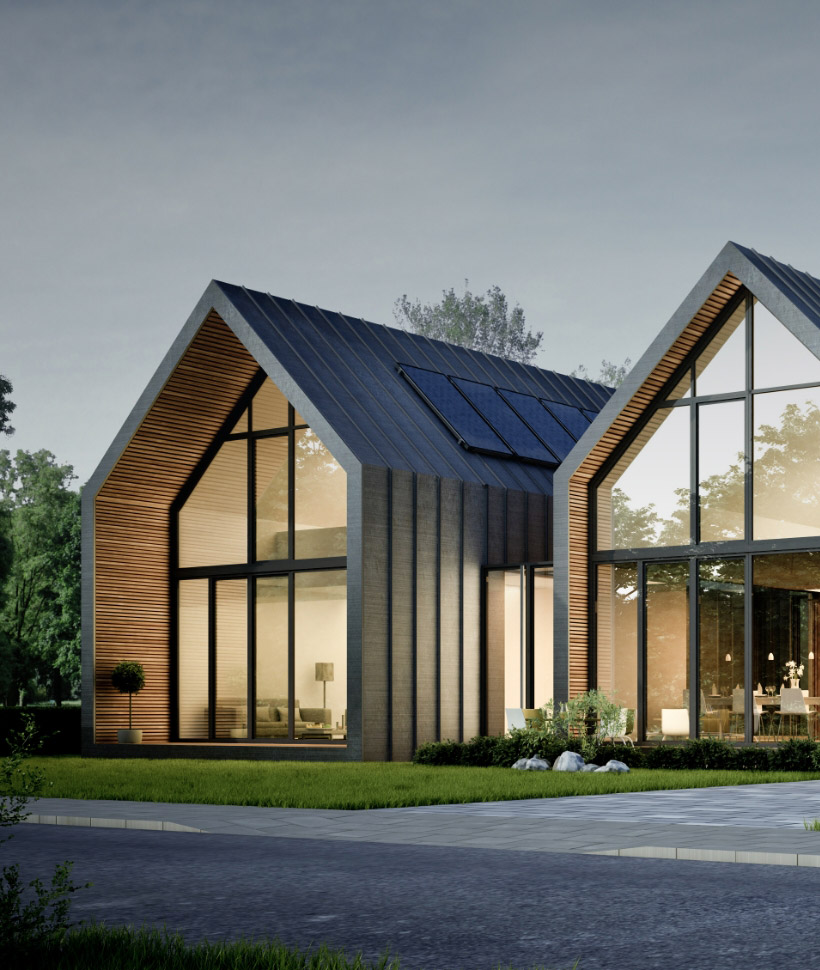
Buyers planning a renovation
A great deal of North Vancouver housing is fifty or more years old. Buying with work in mind is common, and financing the purchase and the renovation together is usually cheaper than borrowing for them separately.

Older housing stock, steep lots and high values make North Shore files more particular than most. I compare more than 30 lenders and tell you early which ones will be comfortable with your property.
North Vancouver files tend to involve the house as much as the borrower. A large share of the housing stock here was built fifty or more years ago, on lots that slope, near creeks, with additions that were not always permitted at the time. Such properties get looked at more closely than a ten-year-old townhouse in a flat suburb, and the things that surface — an unremoved oil tank, knob-and-tube or aluminum wiring, a roof near the end of its life — are much easier to deal with during your subject period than after the appraisal comes back.
Values here also push a good many purchases past the insured-mortgage ceiling, and that changes the arithmetic. The cap sits at $1.5 million: above it a mortgage cannot be insured, so 20% down becomes the minimum and the pool of willing lenders narrows. Below it the stress test rather than the rate is usually what sets your limit, because you have to qualify at a rate above the one you are offered. Both belong in your budget from the start rather than after an accepted offer.
Because so much of the stock is older, renovation comes up constantly. Buying with work in mind is common in Lynn Valley, Upper Lonsdale and around Edgemont, and where the work is planned before completion it can often be financed as part of the mortgage rather than put on a line of credit afterwards — on a $60,000 kitchen the gap between mortgage rates and credit-line rates runs to real money over a term. If that is your situation, the renovation financing options are worth understanding before you make an offer.
The other half of my North Shore work is owners who have held property here for a long time and want to put some of that equity to use — for a renovation, a second property, or to help a child into the market. My offices are in Surrey and White Rock, and given the bridges, almost all of this is handled by phone, email and e-signature.

The North Shore has its own patterns, and each one needs a different approach.
A great deal of North Vancouver housing is fifty or more years old. Buying with work in mind is common, and financing the purchase and the renovation together is usually cheaper than borrowing for them separately.
Long-held Lynn Valley and Deep Cove houses have appreciated considerably. Releasing equity for a renovation, a second property or to help a child buy is one of the most frequent requests here.
Lower Lonsdale and Central Lonsdale carry the same strata considerations as anywhere — depreciation reports, reserve funds, special levies — with the added factor of older buildings among the new towers.
Gifted down payments and co-signing are both common on the North Shore, and they are treated very differently by lenders. A gift needs a letter and a paper trail; co-signing puts the parent on title and on the debt, which affects their own borrowing later.
Purchases, renewals, refinancing and renovation financing across the District and the City.
At Deepinder Sidhu, we are dedicated to helping you turn your dream of homeownership into reality.
Read More about Prime MortgageDeepinder Sidhu is committed to making your home-buying journey simple, confident, and stress-free.
Read More about First-time Home PurchaseWant to Save More on Your Next Mortgage Renewal?
Read More about Mortgage Renewal ServicesAt Deepmortgages, we’re committed to making your dream home a reality.
Read More about Home RefinanceWe prioritize your needs to secure the best mortgage solution for you.
Read More about Commercial MortgageWhen traditional banks cannot approve your mortgage because of credit challenges, income structure, debt ratios, or property type, B…
Read More about B LendingFive stages, with the property assessed alongside your file rather than after it.
A conversation about the property, your income and your timeline. Free, with nothing pulled and nothing committed.
Your borrowing capacity at the qualifying rate, and an early view on whether the age, slope or construction of the property will limit which lenders will consider it.
Whether renovation costs should be built into the mortgage, how the term and prepayment terms should be set, and what breaking early would cost if plans change.
One document package to the lenders best suited to both you and the house, with rate and conditions negotiated on your behalf.
Instructions through to funding with your lawyer or notary, then a renewal review in good time rather than a letter you sign because the deadline arrived.
Both the City and the District of North Vancouver.
My offices are in Surrey and White Rock. Given the bridges, North Shore clients almost always prefer phone, email and e-signature — which works exactly as well and saves everyone the drive.
Oil tanks, older wiring and unpermitted work are dealt with while you still have subjects, not discovered at the appraisal.
Where the work is planned before completion it can often be built into the mortgage rather than funded at credit-line rates.
If the property is likely to be slow to appraise, you find out before you agree to a seven-day subject removal.
The funding lender pays. Anything fee-based is disclosed before work starts.

As first-time home buyers, we were nervous about the mortgage process, but Deepinder made everything simple and stress-free. Highly recommend her as a mortgage broker in Surrey.

She provided great service in our mortgage renewal. She has lots of experience in this field and it was clearly visible in the communication we had . Anyone needing help with mortgage- please do take an advice from her. It will help you for sure

I recently worked with Deepinder on a investment property purchase with a very tight and complex timeline. She was professional, responsive, and went above and beyond to get everything done. Despite dealing with a strata lawsuit disclosure, a rush appraisal, and multiple moving pieces, she kept everything on track and communicated clearly throughout the process. I would highly recommend Deepinder to anyone looking for a knowledgeable and dedicated mortgage broker.

I had a great experience working with my mortgage broker. They were professional, responsive, and made the entire application process smooth and stress-free. They clearly explained every step and found the best options for my situation. I truly appreciate their support and would highly recommend their services.

very happy with Aurel’s service, definitely recommended!

Deepinder Sidhu is Very professional and helpful mortgage broker. Quick approval, great rate, and very good communication. Everything was explained clearly and the whole process was smooth and stress-free. Highly recommended! Thank you so much for making the process easy for us!

Working with Deepinder was an incredible experience. She was always quick to respond and took the time to explain every detail, which made us feel confident throughout the process. As first-time homebuyers, we had a lot of questions, and she never made us feel overwhelmed. She found us a great rate and ensured everything closed on time without any stress. I’d highly recommend Deepinder to anyone looking for a knowledgeable and supportive mortgage broker.

Deepinder sidhu helped us with our mortgage renewal. She is very knowledgeable, helpful,responsive and was always available to answer any questions we had. Deepinder is the best mortgage broker in Surrey.

One of the best mortgage broker i have ever worked.I highly recommend her and again thank you Deepinder Sidhu for providing good interest rate.















Yes — Lower, Central and Upper Lonsdale, Lynn Valley, Deep Cove, Seymour, Blueridge, Capilano, Edgemont and the surrounding areas, along with West Vancouver and the rest of the North Shore. My offices are in Surrey and White Rock, and North Shore files are almost always handled remotely, which most clients prefer to crossing a bridge.
It can. Buried oil tanks are not unusual in older North Shore homes, and lenders and insurers treat an unremoved tank as a contamination risk. Approvals are commonly made conditional on removal and documentation. It is very solvable, but it is far easier addressed during your subject period than after.
Yes, through a purchase-plus-improvements arrangement. The lender advances against the improved value, with the funds released after the work is verified. It requires quotes up front and a lender who offers the program, and it is usually much cheaper than putting a renovation on a line of credit. One caveat that matters on the North Shore specifically: these programs are most readily available on insured mortgages, and the improvement amount is capped as a share of the as-improved value. On a higher-priced uninsured purchase the options narrow, so it is worth confirming early rather than budgeting around it.
Age itself is rarely the problem — condition is. Knob-and-tube or aluminum wiring, an aging roof, additions built without permits and outdated plumbing all draw lender and insurer attention. Most have straightforward remedies. What causes trouble is finding out about them late in a short subject window.
The same rule applies everywhere: you must qualify at a rate above the one you are offered, so the amount a lender will advance is lower than the payment on your actual rate suggests. Because North Shore prices are high, that test rather than the rate is usually what sets your ceiling. There is a second threshold to plan around: the insured-mortgage price cap is $1.5 million, and above it a mortgage cannot be insured, so 20% down becomes the minimum. Both get built into your number from the start.
Sometimes. Significant slope, proximity to a creek or a flood-plain designation can prompt additional conditions, a more detailed appraisal or a shorter list of willing lenders. It rarely stops a purchase, but it does influence which lender the file should go to first.
Often yes, and it changes the arithmetic considerably. Where a legal secondary suite or coach house already exists, most lenders will count a portion of the rental income toward qualifying — typically 50% to 100% depending on the lender, which is a wide enough spread to be worth shopping. Where you intend to build one, the financing is a renovation question rather than a rental one, because the income does not exist yet. District of North Vancouver zoning and permit history both matter here, so send me the details rather than assuming either way.
The paperwork stage is quick — a pre-approval usually comes back inside two business days once your documents are in. What stretches the timeline here is the appraisal. Distinctive properties on slopes, large lots or homes with unusual layouts have thinner comparable sales to draw on, so appraisers take longer and occasionally return a value below the purchase price. If yours looks like that sort of property I will tell you before you agree to your subject dates, not after.
Send me the address and your timeline. I will tell you what lenders are likely to make of the property, and what your file supports, before you commit to anything.